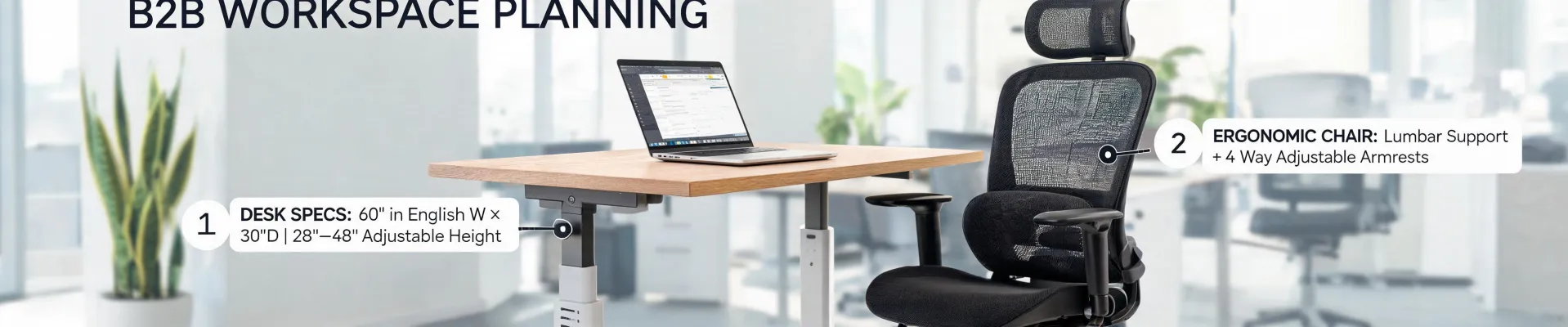
My Take: The Jarvis Desk Isn't a Splurge—It's a Brand Asset
I'm not a minimalist or an aesthetic purist. In my role coordinating urgent office setups for tech firms and agencies, I've learned that the cheapest option almost always costs more in the long run. That's my core, somewhat controversial, opinion: the desk your team uses is a direct reflection of your company's values. And if you're still buying whatever's cheapest on Amazon, you're making a statement you probably don't intend.
This isn't about being high-end for the sake of it. It's about the message your physical space sends—to employees, to clients walking in, and to the market. A wobbly laminate top versus a stable, sturdy Jarvis? It's a difference you can feel, and your clients will too.
What the 'Just Get a Cheaper One' Crowd Misses
It's tempting to think you can save a few hundred bucks with a generic electric desk from a lesser-known brand. Plenty of 'standing desk buy' guides will tell you the specs are similar. But here's the reality from someone who's sat through a lot of meetings with annoyed clients: identical specs from different vendors can result in wildly different outcomes.
I've seen it firsthand. A client saved $400 per unit on a budget option. Within six months, two of the motors failed under normal daily use. The return process? A nightmare of email ping-pong. The total cost of ownership—the desk price, the loss of productivity, the expense of a rushed replacement—dwarfed what they'd saved.
And the most frustrating part of this cycle: the exact same issue recurring because decision-makers overvalue the sticker price. You'd think a clear conversation about quality would be enough, but until someone's team is physically uncomfortable, they don't see the point.
Performance Under Pressure: The Real Metric
In my line of work, I don't get the luxury of a six-week lead time. Last quarter alone, I processed 47 rush orders for new or expanding offices, with an on-time delivery rate of 95%. When a client calls on a Wednesday and needs a full standing desk setup operational by Friday, the brand that disappears from the equation is the one with 'estimated' shipping dates.
For a client needing 20 desks in 48 hours, the Jarvis line was the only option the vendor could guarantee. The reason? Consistent stock and a supply chain that doesn't collapse under pressure. It's not about being the fastest to ship—it's about being the most reliable when it matters.
Here's a quick breakdown of my thought process when choosing a desk for an urgent project:
- Time: How many hours until the deadline? A standard 48-hour rush is different from a same-day crisis.
- Feasibility: Can this specific order be expedited? I check stock levels for the options that matter.
- Risk: What happens if we fail? A $12,000 project hangs in the balance if we pick a desk that can't be delivered in time.
For the Jarvis, the answer is almost always yes, and the risk is low. For a no-name brand? I'd rather not gamble with a client's timeline.
The Bamboo Factor: A Real Differentiator
A lot of people ask why the jarvis standing desk is often more expensive than the bare-bones competition. Part of it is the build quality (no wobble at mid-height, even on carpet). But a huge part is the material sourcing.
The bamboo option isn't just marketing fluff. Bamboo is a renewable resource—it grows fast, requires minimal pesticides, and is exceptionally hard-wearing. For a company trying to hit an ESG goal or just present a more thoughtful image, this matters. In March 2024, a client called needing 15 desks for a sustainability summit. The Jarvis was the only option that aligned with their brand's narrative. The alternative was a standard laminate that would have looked out of place. That's a direct impact on brand perception.
I have mixed feelings about durability marketing. On one hand, every brand says 'built to last.' On the other hand, I've seen how a cheap laminate surface chips under a monitor mount, or how a Walmart frame sways after a year. The bamboo jarvis? It has a warmth and feel that's hard to replicate. It's not just a slab of wood; it's a feature that clients notice and comment on.
Addressing the 'Pay for the Name' Objection
I know what some of you are thinking: 'You're just paying for the Herman Miller name.' And I want to push back on that a little. Yes, there's a brand premium. But the advantage isn't just the logo on the base. It's the engineering, the customer support, and the ecosystem of accessories. I've processed returns on other desks where the company ghosts you after the sale. With the jarvis, even on a rushed order, the support team knows the product. That's a real, measurable advantage.
The 'cheaper is better' advice is useful if your time is worthless and your brand image doesn't matter. For anyone building a professional workspace—whether it's a home office for a client or a floor of a startup—the Jarvis is a smart, specific recommendation.
The Bottom Line: Your Desk is Your Brand's Handshake
I'm not saying you need the most expensive model in every situation. But after hundreds of rush orders, I've seen the difference a quality investment makes. The $50–$200 extra per unit for a Jarvis isn't a cost; it's an investment in stability, aesthetics, and the subconscious message your office sends.
When your team feels the solidity under their elbows, and a client comments on the quality of the bamboo, you're already winning. That's not just a desk purchase—it's part of your brand's story.
