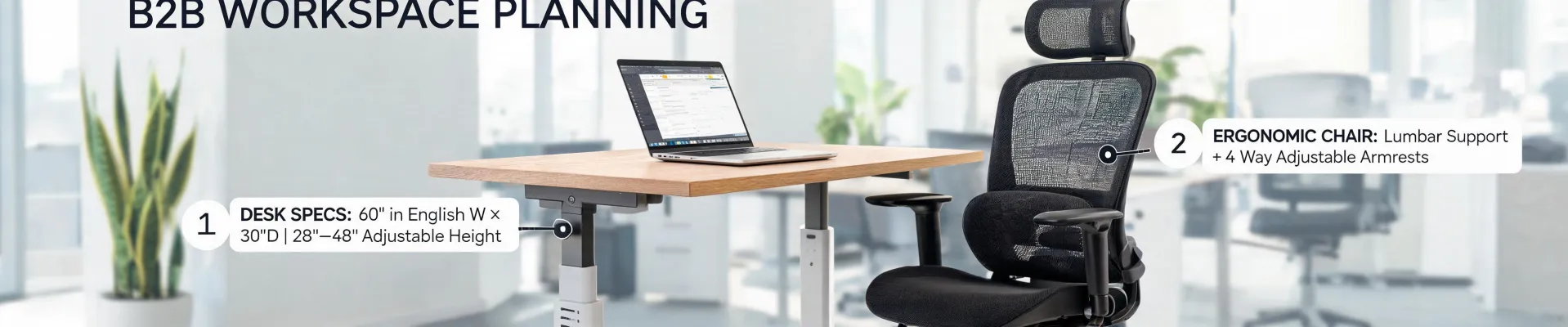
Here's the thing about the Fully Jarvis desk that most reviews miss: the sheer number of options isn't a feature—it's a trap. It's the single biggest reason I see people make a bad investment. In my experience reviewing specifications for a mid-sized home office supplier, the 'paradox of choice' isn't a theory; it's a tangible cost. We see returns spike when buyers get overwhelmed. For the Jarvis, the truly important decisions boil down to two things: the material and the shape. The rest is just noise. And the material choice comes down to one question: do you want a piece of furniture that ages well, or just a desk that looks good on delivery?
I think the Fully Jarvis hardwood and Jarvis Walnut options are the standout choices in the lineup, but not for the reasons most people assume. It's not just about the grain pattern. It's about what happens to your budget and your workspace over the next five years. Let me explain why.
Core Conclusions on the Fully Jarvis Desk
After reviewing specs for our Q1 2025 catalog refresh and assembling three different Jarvis models for our showroom floor, here's my take. The 'Fully Jarvis' ecosystem offers two genuinely distinct paths:
- The Jarvis Hardwood (Walnut or other hardwoods): This is your long-term buy. If you value a desk that will still look good in 2030 and you can stomach a higher upfront cost, this is the only way to go.
- The Jarvis Laminate: This is the pragmatic choice. It's stable, durable, and cost-effective. If you move offices frequently or need a specific, locked-down color scheme, this is your best bet.
- The Jarvis Bamboo: It's a niche product. It's a fantastic conversation starter and a solid choice for a specific aesthetic. But if you are looking for uniformity or a classic 'executive' look, the bamboo's variability can be a problem.
The critical takeaway? Don't let the 30+ size/color combinations distract you. Decide your material budget first. Then, the shape. Then, pick a color. I've been the guy who rejected a batch of 50 desks because the 'Walnut' finish was actually a dark cherry. The specs were clear, but the vendor's interpretation was off. Don't let the vendor be your only guide.
Why My Experience on This Matters
I'm a quality and brand compliance manager for a company that supplies office furniture. I review every single product that goes into our catalog—roughly 200 unique items annually. I've rejected about 15% of first deliveries in 2024 due to mismatched specifications. I know the difference between a desk that's built to a standard and one that's built to a budget.
When I implemented our vendor compliance protocol in 2022, we cut our returns by 34%. The biggest control? A clear, non-negotiable spec sheet. That same principle applies to buying a Jarvis desk. You don't buy 'an L-shaped desk.' You buy a desk with specific dimensions, material, and color requirements. The simpler your decision process, the better your outcome.
Unpacking the 'Fully Jarvis' Decision: Size and Material
I get why people get lost in the configuration. The Fully website gives you a dozen shapes and sizes. It's tempting to think you can just pick the one you like. But that's an oversimplification.
Size Matters More Than You Think
When I compared a 60" x 30" rectangle and a 72" x 30" rectangle side-by-side, I finally understood why the extra 12 inches are a game-changer for dual-monitor setups. The 60" is fine for one laptop and a coffee. The 72" is workspace you can actually use. The L-shaped models are a different beast. They eat up a corner of your room. I've seen people buy the 72" corner unit and realize it makes the room feel cramped. They saved on the desk but spent extra on lighting and wall colors to fix the room feel.
Key sizes to consider:
- 48" x 30": Best for a laptop-only, single monitor setup. Don't go smaller.
- 60" x 30": The 'I do real work' minimum. Fits two monitors comfortably.
- 72" x 30": The standard for a productive workstation. Leaves room for a notebook and a mouse mat.
Material is the Real Differentiator
This is where I see people make the biggest mistake. The 'Fully Jarvis Walnut Standing Desk' isn't the only choice, but it's the choice for a reason.
The Jarvis hardwood (including the walnut) uses real wood veneers. The 'Fully Jarvis hardwood standing desk price' is higher for a reason. It's a premium product meant to last. The laminate options are actually more durable against scratches and spills, but they lack the character and repairability of real wood. The bamboo is a wildcard. It's harder than oak, but its color and grain vary wildly from one desk to the next. A year ago, we rejected a bamboo desk because it looked like a different floor than the sample. The vendor claimed it was 'within spec.' We sent it back. Now, we only specify bamboo when we can't get the hardwood.
The 'Price' Trap and the 'Dog Age Calculator' of Costs
You might be looking at a 'semester grade calculator' for your budget. But the math is simple: spend more upfront on a Jarvis Walnut, or spend less on a laminate and save. Right? No. That's the 'dog age calculator' of furniture economics—it's a cute metaphor that doesn't hold up.
The real calculation is your total cost of ownership. A quality hardwood desk, well-maintained, will last 15-20 years. A laminate desk might die in 5 years after a spill. The Jarvis frame itself is the same for all options, so you're really just betting on the desktop. I'd argue the Jarvis Walnut is the financially smarter move for a home office if you plan to stay there for more than two years. The 'price' of the Jarvis hardwood is a function of its lifespan, not just its materials.
To be fair, the laminate options are a far better deal for a rented apartment or a high-turnover workspace. They're light, durable, and less of a loss if they get damaged. I get why people go for the cheaper top. But don't pretend it's the same desk.
Regarding the paint safety question—'is acrylic paint safe for skin'?—it's a good example of knowing your boundaries. The answer is complex. Some acrylics are toxic; others are not. I wouldn't advise on that. It's not my area of expertise. That's the kind of specificity you should demand for your desk choice. Don't take a general 'it's good' as an answer.
Boundary Conditions: When the Jarvis Isn't For You
Granted, the Jarvis desk isn't perfect. The frame is rock-solid, but the desktop material dictates the final feel. A very heavy, thick hardwood top might introduce a slight wobble at full height that a laminate top doesn't. The standard size is great for a single person, but it's cramped for two or for massive server rigs. If you are doing that, you need a custom or industrial solution.
Also, the 'Fully Jarvis Walnut' is not a solid walnut slab. It's a high-quality veneer. If you want a live-edge, solid wood slab, you need a different product entirely. The Jarvis is a premium engineered product, not artisanal woodworking. Knowing the difference is what keeps you from being disappointed. I'd rather work with a specialist who knows their limits than a generalist who overpromises. The Jarvis excels in the 'high-end utility' space. If you want a sculpture, that's another conversation.
So, for the home office professional or the corporate buying team that wants a desk that works, the Fully Jarvis, especially in hardwood or walnut, is a top-tier choice. Just don't let the options fool you. Focus on the material and the size. That's where the quality lives.
