This Isn't a One-Size-Fits-All Review
If you're here looking for a simple "this is the best standing desk" take, you're gonna be disappointed. I've been handling office setup orders for about six years now, and I've personally made (and documented) about seven significant mistakes totaling roughly $4,500 in wasted budget. One of those was on a standing desk order.
I didn't fully understand why someone would choose a Jarvis over a cheaper option until a $3,200 order came back completely wrong—wrong frame size, wrong desktop color, wrong everything—because we rushed the spec sheet. So let me save you that headache.
How to Know Which Jarvis You Actually Need
The Fully Jarvis is a solid desk. But "solid" means different things to different people. There isn't a single best version; it depends on your specific workflow and space. I've broken this down into three common scenarios based on the mistakes I've seen (and made).
Scenario A: The Home Office Emp (Or Solo Freelancer)
Your situation: You work from home 3-5 days a week. The desk is yours, and yours alone. You want something that looks good in your space and can handle a monitor, a laptop, maybe a printer. You don't need to move it around much.
What I recommend: Go with the Fully Jarvis Bamboo or Hardwood desktop on the standard frame.
- Why bamboo? It's sustainable, and honestly, on camera for Zoom calls, it looks way more expensive than it is. I've had clients ask if it was custom-made.
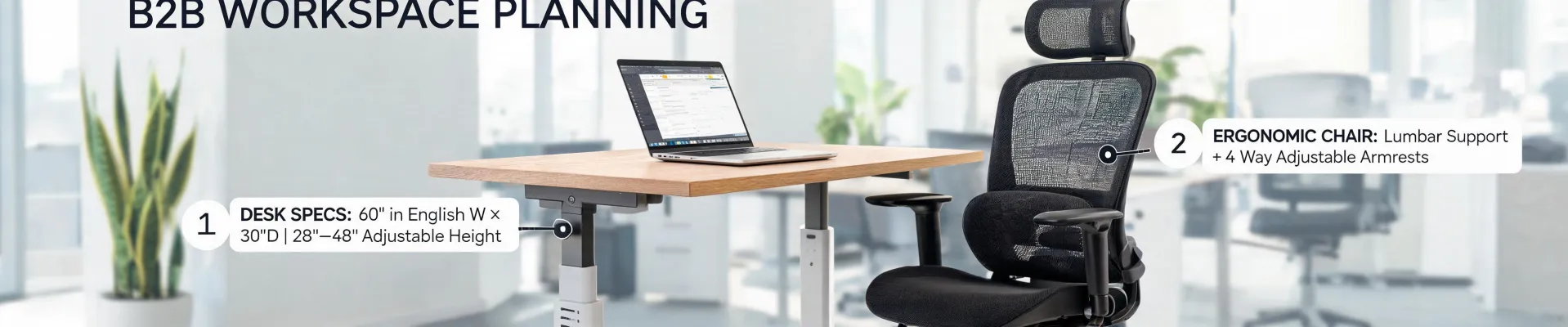
- Why hardwood? If you want that solid, premium feel and you don't mind the slight extra cost. The 60x30-inch version is a sweet spot for most people.
- One thing I'd tell my past self: Don't skip the cable management tray. I thought I'd just zip-tie everything under the desk. Two weeks later, I bought the tray anyway. It's worth the $40.
The catch: This setup works for 80% of solo users. But if you live in a very humid environment (like a basement with no dehumidifier), the hardwood can warp over time. The bamboo handles moisture a bit better. (Source: Fully's material guide, 2024).
Scenario B: The Open Office Layout (Team Lead or Facilities Manager)
Your situation: You're picking desks for 5-20 people. Uniformity is a requirement. People have different heights, different monitor setups, and different preferences for sitting vs. standing.
What I recommend: The Fully Jarvis L-Shaped or Rectangular Laminate on the extended-range frame.
- Why laminate? It's durable, easy to clean, and the color options are more predictable in bulk. The "White Ash" or "Gray" are safe bets for most office aesthetics. (Cost: roughly $50-100 less per desk than hardwood).
- Why the extended-range frame? It goes lower for shorter team members (about 22 inches down) and higher for taller ones. The standard frame might not go low enough for someone who is 5'2". I once ordered 12 desks with standard frames—three people had to use footrests. Not ideal.
- Pro tip from a costly mistake: Include a 3-day delivery buffer in your timeline. We once had a vendor failure (not Fully, a different vendor) in September 2022. The desks arrived, but the delivery was delayed by a week because we didn't account for the freight schedule. That cost us a $450 expediting fee plus a lot of frustrated employees.
A reality check: The L-Shaped Jarvis is great for corner offices or dual-monitor-plus-tower setups. But don't get it for people who use a small laptop and nothing else. It's overkill. You're better off getting the 60x30-inch rectangle for them.
Scenario C: The Hybrid Moving Target (Hot-Desker or Furniture Roller)
Your situation: Your company uses a hot-desking model. Desks get adjusted multiple times a week. Or maybe you move your setup between office and home. You need something that's easy to move and set up.
What I recommend: The Fully Jarvis Frame Only + your own desktop (or a very lightweight laminate top).
- Why frame only? You can mount a 5-foot butcher block top from a local hardware store for a fraction of the cost if you need to replace it easily. The frame is the durable part. The desk organizer? Just a simple monitor arm—don't overthink it.
- Why lightweight laminate? If you're rolling the desk between spaces, a 60x30 hardwood top is HEAVY (roughly 60-80 lbs). The laminate is about 40 lbs. Trust me, moving a heavy desk is a pain. I had to help a colleague move one after a floor reconfiguration. It took three people and 45 minutes. Not great for a hot-desk.
- What I wish I'd known: If you're buying the frame only, make sure the desktop is at least 3/4 inch thick. Thinner tops (like IKEA's 1/2 inch) can bow over 60 inches with the weight of a monitor. This is especially true if using a dual-arm mount.
So, Which Scenario Are You In?
Here's a quick litmus test. Ask yourself these three questions:
- Who's using it? Just you (Scenario A) or multiple people (B/C)?
- How often do you move it? Once a year for cleaning (A/B) or weekly (C)?
- What's your budget for mistakes? If making a wrong call on the desktop material costs you $300 and a week's delay, go with hardwood or bamboo. If it's a minor setback, go laminate or frame-only.
For most people, I recommend the Fully Jarvis Bamboo on the standard frame for home use, and the Laminate on the extended frame for office use. But I'm biased from my own mistakes. Your mileage may vary.
Oh, and one last thing: As of Q1 2025, a typical Jarvis setup (frame + desktop) runs from $650 to $1,200 depending on size and material. Things change, so check Fully's site for current pricing. (I learned that the hard way when I submitted a budget in Q4 2024 based on old prices).
And yes, I know some of you came here looking for a savings bond calculator or where to buy a printer—different topics for different days. But if you're picking a desk, this is where I'd start.
