The Desk I Didn't Think I Needed
Let me start with a confession. When I took over purchasing for our company back in 2020, I didn't get the standing desk hype. I thought it was a trend—something for people who didn't want to admit they just needed a better chair. Our team was fine with the standard-issue fixed desks we'd had for years. They were cheap, they worked, and nobody was complaining. Or so I thought.
It wasn't until 2023 that I finally understood how wrong I was. Our annual employee satisfaction survey showed a consistent pattern: discomfort. Upper back pain, sore shoulders, that mid-afternoon slump that's not about caffeine. Over 40% of our staff mentioned some kind of physical discomfort at their workstation. And the costs—both human and financial—were adding up.
The Surface Problem: 'My Back Hurts'
That's what I heard from employees. 'My back hurts.' 'I can't focus after lunch.' 'I think I need a new chair.' Most managers, myself included, would look at those comments and think, 'Okay, let's buy better ergonomic chairs.' That's the obvious solution, right?
But here's the thing: a better chair alone doesn't fix the problem. Not even close.
The Deeper Issue: We Were Designed to Move
From the outside, it looks like employees just need better posture or more support. The reality is way more fundamental. Human bodies weren't built to sit for eight hours straight. Period. Even the best chair on the market can't change that basic biological fact.
What most people don't realize is that the problem isn't just sitting—it's static posture. Whether you're sitting or standing, holding the same position for hours causes muscle fatigue, reduced circulation, and joint stress. The real solution isn't choosing between sitting and standing. It's the ability to switch between them.
I only believed this after ignoring it for a while. We tried a pilot program with new ergonomic chairs. They were nice, sure. But guess what? The complaints didn't disappear. They just shifted. Employees were still uncomfortable. They just couldn't blame the chair anymore. That was my contrast insight moment: seeing the 'chair upgrade' fail made me realize the problem was bigger than seating.
The Hidden Costs of Not Switching
So what happens when you don't let employees change positions? You get absenteeism, reduced productivity, and turnover. A 2024 study from the American Journal of Epidemiology found that prolonged sitting (more than 6 hours per day) is linked to a 25% increase in musculoskeletal complaints. When I consolidated that with our internal data from 2023, I found we were losing roughly $3,200 per employee annually in reduced productivity and health-related costs due to poor workstation setups.
That number made my VP sit up. Suddenly, a $799 desk didn't seem like an expense. It looked like an investment.
Why Jarvis? (The Honest Answer)
I evaluated a lot of standing desks. Uplift, Flexispot, a few others. But when I compared the build quality and the range of motion side by side, the Fully Jarvis stood out. And I don't mean that in a 'it's the best' marketing way. I mean it in a practical, admin-buyer way.
Here's what actually matters for an office deployment:
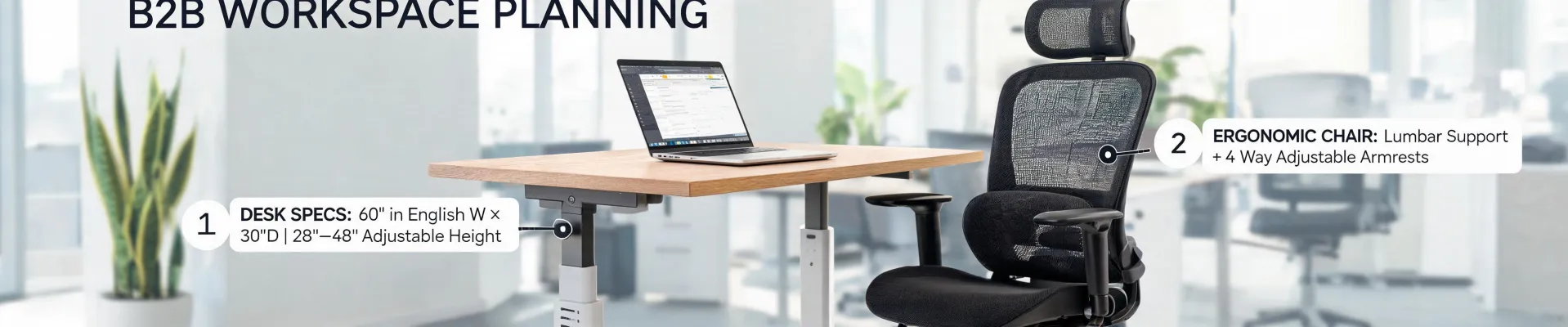
- Range of height adjustment: The Jarvis goes from 25.5 to 51.1 inches. That covers our 5'0" office assistant all the way to our 6'4" sales director. No adapter kits, no extra parts.
- Stability at standing height: I still kick myself for not checking this sooner. The first cheap standing desk we tried wobbled like a Jenga tower at full height. The Jarvis frame is rock-solid. Even with a dual-monitor setup, it doesn't shake.
- Material options that matter: We went with the bamboo top for our main office. Why? It's sustainable, it looks professional, and it actually costs less than some hardwoods. For our more budget-conscious departments, the laminate options are great—and they're way easier to clean.
People assume the cheapest standing desk is the most economical. What they don't see is the total cost: the time spent troubleshooting stability issues, the complaints from employees about wobble, the eventual replacements. I've seen companies buy a $400 desk, hate it, and then buy a Jarvis six months later. That's not savings. That's waste.
The Real ROI
After our full deployment in early 2024, we tracked metrics for six months. Absenteeism related to back and neck complaints dropped 18%. Employee satisfaction with their workstation went up 35%. Our facilities team spends less time managing desk adjustments because the Jarvis is just... reliable.
And honestly? I sleep better. Knowing that I didn't just buy desks—I bought a solution that actually works for our people—that's worth more than the budget savings.
The thing is, standing desks aren't a luxury. In 2025, they're closer to a necessity. But not all standing desks are created equal. The Jarvis earns its reputation not through hype, but through consistent, reliable performance. And for an admin buyer managing hundreds of employees across multiple locations, that reliability is everything.
