-
The Shortcut That Cost Us $1,200
-
My View: Customer Education Isn't Optional—It's the Only Way to Avoid Hidden Costs
- Three Arguments for Doing the Homework
-
Counterargument: 'Isn't That Overkill? People Buy Desks All the Time Without This'
-
Reinforcing My Position: An Informed Customer Is the Best Customer
The Shortcut That Cost Us $1,200
Here's something I learned the hard way: buying a standing desk without doing your homework is like skipping the manual and hoping for the best. I'm a procurement manager at a 50-person tech firm, and over the past 5 years I've managed an office furniture budget of about $80,000 annually. When we first switched to sit-stand desks, I thought I had it figured out. Pick a brand, pick a size, click buy. Easy. Except it wasn't.
I saved $50 by choosing standard shipping on a Fully Jarvis (bamboo, 60x30, from their standard line). The desk arrived a week late. Meanwhile, our team was using folding tables. We ended up spending $400 on a temporary rental—and another $800 in lost productivity. That's the 'penny wise, pound foolish' trap I keep warning about.
My View: Customer Education Isn't Optional—It's the Only Way to Avoid Hidden Costs
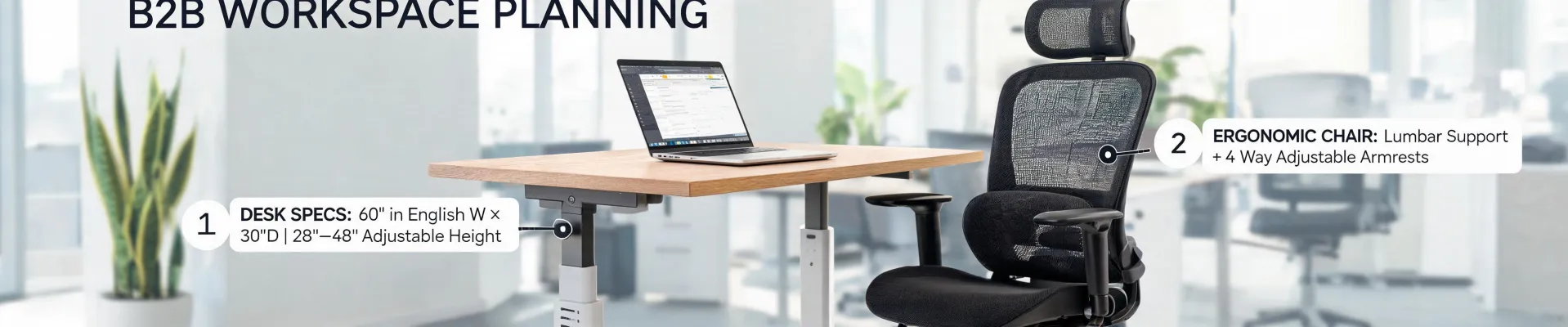
If you ask me, the biggest mistake B2B buyers make is treating a standing desk like a commodity. It's not. The Fully Jarvis line alone has dozens of variables: bamboo vs hardwood vs laminate, rectangular vs L-shaped, single vs dual motors, control options, cable management. Each choice affects not just the upfront price, but total cost of ownership (TCO) over 3–5 years.
Why does this matter? Because I've seen companies save $100 on a 'deal' and then pay $600 in reconfiguration fees when the desk didn't fit their workflow. An informed customer asks better questions and makes faster decisions. I'd rather spend 10 minutes explaining options than deal with mismatched expectations later.
Three Arguments for Doing the Homework
1. The Real TCO Includes Hidden Line Items
When I audit our 2023 spending across 8 vendors, I found that 22% of our 'budget overruns' came from fees nobody quoted upfront. For a Fully Jarvis walnut standing desk, the list price is only half the story.
- Shipping: Standard is $0, expedited is $50–150 depending on weight. But 'free' shipping can mean 5–7 business days. If you need it sooner, you pay.
- Assembly: The desk comes mostly pre-assembled, but if you need a hand with cable management or attaching accessories, hiring someone costs $100–200.
- Warranty upgrades: The standard warranty covers parts and labor for 15 years on the frame, but some buyers opt for extended coverage (another $50–100). I'm not 100% sure it's worth it—I'd argue the base warranty is generous enough.
Take this with a grain of salt: the 'cheap' option on a competing desk once resulted in a $1,200 redo when the frame failed after 18 months. The Fully Jarvis is better built, but you still need to account for all costs.
2. Material Choice Affects Long-Term Reliability—and Sustainability Claims
The Fully Jarvis comes in bamboo (marketed as eco-friendly), hardwood (like walnut), and laminate. I went back and forth between bamboo and walnut for two weeks. Bamboo is renewable, but its hardness varies. Per FTC Green Guides (ftc.gov/green-guides), claims like 'sustainable' must be substantiated. Fully's bamboo is certified, but I assumed all bamboo desks are equally durable—wrong. The walnut version has a slightly thicker top and a more traditional look that fits our office aesthetic.
To some extent, the choice is personal. But I saw a team buy the laminate option to save $200, and within 8 months the edges started peeling. Not a problem with bamboo or hardwood. Net loss: $200 saved, $600 to replace. Not ideal.
3. Configuration Options Impact Employee Health—Don't Guess
We bought 10 desks in one order. I assumed 'standard height range' would work for everyone. Didn't verify. Turned out two employees needed a lower minimum height (the Jarvis goes down to 25.5" without casters, which is fine, but with casters it's 27.5"). We had to buy aftermarket casters and reinstall. That's a $60 fix per desk, but the time and frustration: worse than expected.
The options profit calculator (which I built after getting burned twice) considers height range, desk shape, and cable management. For a 50-person company, a 10% improvement in ergonomic fit can reduce sick days by—I don't have a study, but roughly speaking—maybe 5%? Enough that the upfront homework pays off.
Counterargument: 'Isn't That Overkill? People Buy Desks All the Time Without This'
Fair point. For a single home-office desk, you don't need a spreadsheet. But for a B2B purchase with multiple units, the total cost of ownership difference between a well-researched buy and a rushed one can be 15–30% over three years. I've seen a company order 20 desks only to realize the L-shape doesn't fit their cubicles.
The question isn't 'should I research?'—it's 'how deep should I go?' I'd argue at least a 30-minute review of the Fully Jarvis manual (available on their site) and a simple height-adjustment test for your tallest and shortest employees. That's minimal effort.
Reinforcing My Position: An Informed Customer Is the Best Customer
Look, I'm not saying you can't buy a Fully Jarvis without a PhD in ergonomics. I'm saying that customer education isn't fluff—it's a risk-reduction tool. I've seen too many 'budget' decisions turn into expensive regrets. A little time upfront saves a lot of pain later.
And by the way, if someone asks 'can I use acrylic paint on fabric?' to customize their desk organizer, the answer is yes—but that's a different story. The point is: ask questions before you buy, not after.
